
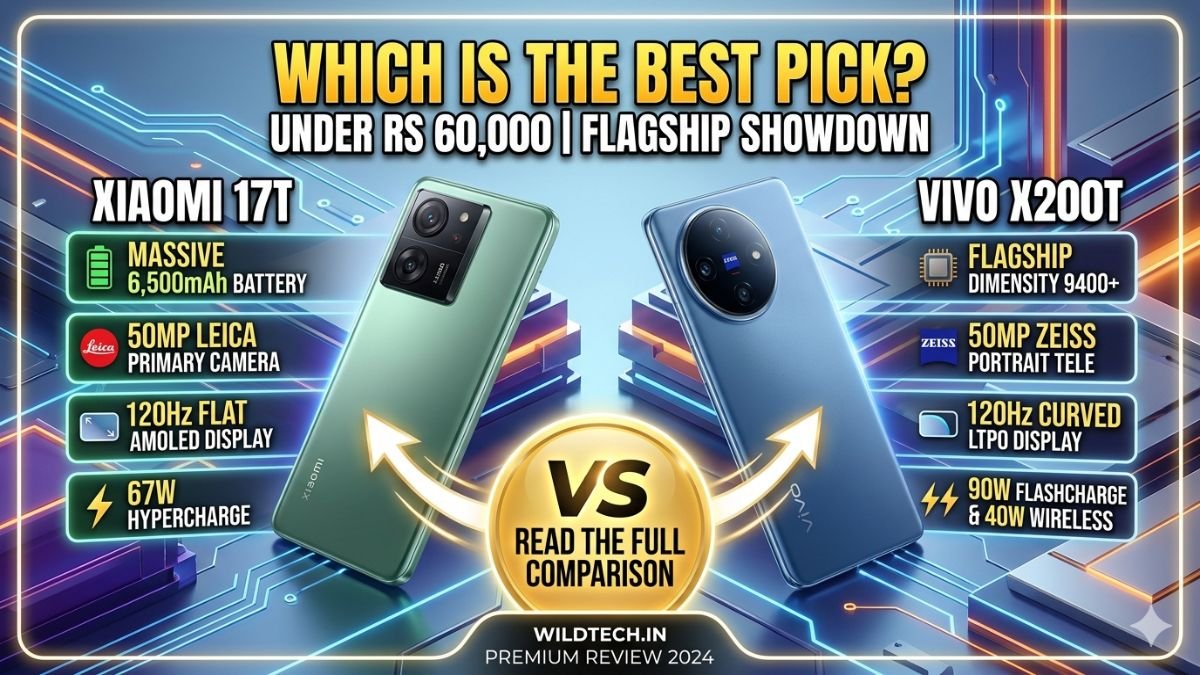
Xiaomi 17T vs Vivo X200T : Confused between the Xiaomi 17T and Vivo X200T? Read our technical hardware comparison analyzing processing speed, camera sensors, thermal efficiency, and battery infrastructure to find the best flagship under 60,000.
The Xiaomi 17T is a sub-flagship smartphone available in India, with a starting price of ₹59,999. It features a 6.59-inch AMOLED display, a MediaTek Dimensity 8500 Ultra chipset, a 50MP Leica-tuned camera system, and a 6,500 mAh battery with 67W charging.
The mid-premium smartphone segment in India, hovering under the ₹60,000 price matrix, has become the primary battleground for true flagship hardware innovations. Consumers operating in this pricing tier no longer settle for basic performance values; they demand pro-grade camera sensors, elite computing processors, and cutting-edge battery chemistries. The recent market entry of the Xiaomi 17T and the Vivo X200T represents a direct ideological conflict between two engineering giants aiming to dominate this premium bracket.
1. Computational Framework: Semiconductor Benchmarks
The core performance baseline of any premium device depends directly on its System-on-Chip (SoC) architecture, nanometer lithography, and real-world thermal management under high computing loads.

Xiaomi 17T: The AI-Optimized Engine Xiaomi 17T vs Vivo X200T
The Xiaomi 17T runs on the cutting-edge MediaTek Dimensity 8500 Ultra processor. Built on a premium 4nm architecture, this processor features high-performance ARM Cortex execution cores optimized for advanced machine learning models and heavy multitasking. Paired with high-bandwidth LPDDR5X RAM and UFS 4.1 storage, this phone processes large file extractions, 4K rendering cycles, and daily application switches with zero system lag.
Vivo X200T: The Raw Processing Beast
Vivo responds by equipping the X200T with a highly optimized flagship silicon platform designed for sustained graphical rendering. The Vivo X200T delivers incredibly high single-core and multi-core computing metrics. For hardcore mobile gaming, its custom GPU utilizes hardware-level optimizations to maintain highly stable frame rates during intensive graphic processing sessions, supported by a generous internal vapor chamber cooling setup.

2. Display Engineering: Color Accuracy and Structural Luminescence
Premium displays require a balanced combination of high peak brightness, high refresh rates, and low battery consumption.
- Xiaomi 17T Panel Architecture: Featuring a flat 6.59-inch LTPS AMOLED display, Xiaomi uses advanced low-temperature poly-silicon backplanes to scale its refresh rate dynamically up to 120Hz. It boasts a peak outdoor brightness of 3,500 nits, making it exceptionally readable under blinding daylight, safely protected by scratch-resistant Gorilla Glass.
- Vivo X200T Display Parameters: Vivo deploys a beautifully sculpted 6.67-inch Curved LTPO AMOLED screen that supports an adaptive refresh rate running from 1Hz to 120Hz, preserving immense battery life. It offers deep, infinity-like contrast ratios and rich color spaces, making it a spectacular device for high-dynamic-range (HDR) movie streaming.
Technical Architecture Matrix: Head-to-Head Comparison
| Feature Class | Xiaomi 17T Specifications | Vivo X200T Specifications | Engineering Edge |
|---|---|---|---|
| Processor SoC | Dimensity 8500 Ultra (4nm) | Premium Flagship Tier SoC | Vivo (Sustained Gaming) |
| Display Panel | 6.59″ 120Hz Flat LTPS AMOLED | 6.67″ 120Hz Curved LTPO OLED | Vivo (Dynamic Battery Saving) |
| Main Camera | 50MP Primary with OIS | 50MP Sony Custom with OIS | Tie (Identical Daytime Sharpness) |
| Telephoto Optics | Ultra-Wide Hybrid Configuration | Dedicated Portrait Telephoto Lens | Vivo (Lossless Portrait Optics) |
| Battery Layer | 6,500mAh High-Density | 5,800mAh Ultra-Thin Cell | Xiaomi (Massive Capacity) |
| Charging Node | 67W Fast Power Delivery | 90W FlashCharge Infrastructure | Vivo (Faster Refill Cycles) |

3. Optics Revolution: Professional Mobile Photography Realities
Both manufacturers have built specialized mobile imaging divisions, yet their final hardware tuning targets entirely different user demographics.
Xiaomi 17T Camera Capabilities
Xiaomi uses a highly advanced 50-megapixel primary camera sensor paired with Optical Image Stabilization (OIS). Its image signal processor focuses heavily on capturing natural, unedited color spaces with excellent dynamic range. In daytime landscapes, the sensor captures incredible structural details. However, its secondary ultra-wide and auxiliary lenses lack the raw sensor size found in Vivo’s layout, relying more on software tuning for low-light shots.
Vivo X200T Camera Innovations

Vivo’s camera system is explicitly built for premium portrait photography and advanced low-light optics. Driven by a custom 50MP primary Sony sensor with customized anti-reflective optical coatings, the X200T minimizes internal lens reflections perfectly. Furthermore, the inclusion of a dedicated portrait telephoto lens allows the device to capture stunning human subjects with a beautiful, natural background bokeh effect that rivals professional cameras.
4. Battery Chemistry and Power Management Systems
The implementation of next-generation battery anodes has allowed both brands to pack high capacities into sleek frames.
- Xiaomi’s Battery Dominance: The standout engineering achievement of the Xiaomi 17T is its massive 6,500mAh high-density battery pack. By utilizing modern silicon-carbon anode materials, Xiaomi provides an exceptional two-day battery life for heavy users, supported by controlled 67W fast charging parameters to prevent battery health wear.
- Vivo’s Speed Infrastructure: The Vivo X200T deploys an ultra-thin 5,800mAh battery cell. While smaller in capacity compared to Xiaomi, it compensates with high-velocity 90W wired FlashCharge capabilities, reviving the phone from 0% to 100% in just under 35 minutes.
4 Crucial Frequently Asked Questions (FAQs)
Q1. Which phone handles thermal management better during continuous high-end gaming?
Ans: The Vivo X200T holds a clear advantage here. Its processing core is backed by a highly advanced, multi-layer vapor chamber liquid cooling network. This system spreads out surface heat quickly, preventing the performance drops and game stuttering that can occur during long gaming sessions.

Q2. Does the curved screen layout of the Vivo X200T cause accidental touches?
Ans: No. Vivo incorporates advanced software palm-rejection algorithms along the curved edges of the display. This ensures that the system easily differentiates between accidental palm rests and intentional finger swipes, offering a flawless software experience.
Q3. Do both devices ship with fast charging blocks included inside the retail packaging?
Ans: Yes. Unlike Western flagship brands that remove accessories from the box, both Xiaomi and Vivo include their high-wattage charging adapters (67W for Xiaomi and 90W for Vivo) along with high-grade Type-C data cables inside the box.
Q4. Which device offers better software support and long-term security integration?
Ans: Both brands offer premium flagship software support cycles, providing up to three major Android operating system platform upgrades and four full years of continuous security patches, ensuring your device remains compatible with future online banking protocols.
Strategic Technical Conclusion
The ultimate buying decision under ₹60,000 depends entirely on your operational requirements:
- Select the Xiaomi 17T if: Your absolute top priorities are unparalleled battery longevity, a flat display that is highly resistant to impact, and a clean, reliable flat-screen workflow that easily delivers up to two full days of heavy usage on a single charge.
- Select the Vivo X200T if: You demand a premium lifestyle device with a gorgeous curved aesthetic, advanced portrait camera mechanics that excel at low-light photography, and superfast 90W charging speeds to minimize down-time.



VK Singh is an Editor and Content Writer with 4+ years of experience in technology, automobile, and trending news writing. She is passionate about creating accurate, informative, and reader-friendly content. At WildTech.in, she covers the latest updates on cars, bikes, smartphones, gadgets, and technology trends, helping readers stay informed with reliable and easy-to-understand information.